
Hello readers! This week I finally started making a map for the Highmoor book series, which made me realise two things: 1) getting this map to a presentable state is going to take more time than I anticipated, and 2) I need to start thinking more carefully about distances traveled, the state of roads, how much stuff people are carrying, and how mean they are to their horses.
Of course, when you start investigating these things, you end up down a rabbit hole of Google searches phrased as full questions. How fast did medieval armies travel? How fast did medieval cavalry travel? How fast did the Mongol army travel? How fast did Roman soldiers travel? Did they always end up back in Rome, or was their road network more diverse than I have been led to believe?
The first logical step: how far could I walk in one day?
This feels like a good benchmark. I’m not particularly fit, especially by ye olde standards, but I’ve done a fair amount of technical hill walking with relatively heavy bags (even heavier once I’ve found some cool rocks). The longest hike I’ve ever done was 23 miles (37 km) – but there is no way in hell that I could repeat this distance, on such rugged terrain, every day for a week.
Based on this fully scientific evidence, I don’t imagine that any characters in my books could average more than 16 miles per day through mountainous terrain. They aren’t super human. Well, most of them aren’t.
Still, how far can people get when they’re using dirt tracks instead of narrow, rocky paths? How far could they walk on flat, paved roads? And how fast could they go on horses, and for how long? I don’t know the range of a budget family horse. How often do they need to be refueled? I can’t risk horsey people sending me angry letters. Clearly, more research is required.
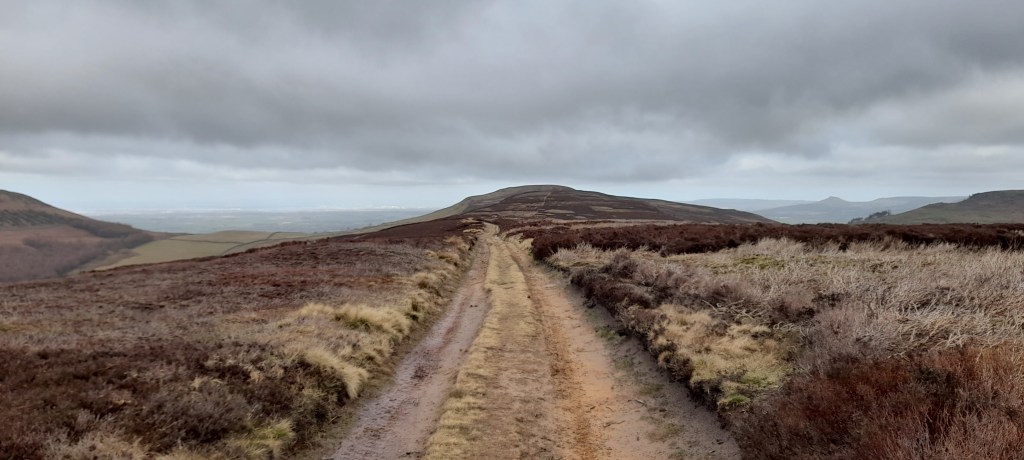
The second step: thinking in a historical context
My first Google question was “how fast did medieval armies travel?” because, broadly speaking, my fantasy novels are at that level of technological advancement – magic excluded. Obviously I’m not the first to ask this question, so there are a wealth of answers on Quora, Reddit and Stack Exchange from apparent experts. Weirdly, these explanations are often delivered in a somewhat scathing manner (“Oh, did I forget to mention terrain? You can figure that out for yourself”) as if you’ve offended these people by not already knowing about their specialist subject.
However, it seems that a foot soldier carrying heavy equipment could manage up to 20 miles per day, but usually slightly less. There are stories of armies moving faster; for example, Harold Godwinson marched an army 185 miles from London to Yorkshire in four days – much to the surprise of 9,000 invading Vikings, who were subsequently trounced. Unfortunately, the Godwinners then had to hightail it down to Hastings, where some French bastard made them all Godlosers.
Even so, medieval armies had nothing on the Romans when it came to long distance travel. When the Romans went on road trips, they did it properly. Those guys could do 20-30 miles per day, carrying 30 kg of equipment, and they often had permanent barracks en route in which they could rest and refuel. If you’re still wondering what the Romans ever did for us, I’d argue that they might have invented the motorway service station.
So, Roman soldiers probably define the fastest speeds you could go by foot. By human foot, at least. Because what if you used a horse’s feet instead? Fantasy authors bang on about horses all the time, but I wonder how much we actually know about them.
The third step: horse research. How do horses work?
It’s easy assume that horses will get you to places faster. However, until I did some “research” (Some guy on Reddit et al., 2018), I would have struggled to guess how far and how fast a horse could go in one day, per day, for a month.
So, the first problem with horses: food. Horses eat 2% of their own body mass each day, and they’re fussy eaters. They require a bit of grass or hay to keep their inner mechanisms operational, so you can’t just feed them grain and hope to get away with it. This is certainly something for me to bear in mind when the plot forces horses through deserts or mountains (what’s this, spoilers?).
The second problem with horses: sleep. They need as almost much sleep as we do if they’re going to be functional the next day. Admittedly, they won’t be as fussy about their accommodation, and would probably be happy in a Roman era motorway services, but they need to rest.
The third problem with horses: short battery life. I’m sure I’ve seen films where armies on horseback charge from place to place at full gallop, but if you stop to think about it, a horse could hardly keep this up all day. At best, they could keep going at a trot on good terrain – but keep a gallop up for too long and your horse will become unresponsive, miles from a charging point.
However, in the 13th century, the Mongol Empire solved these problems using a strategy I can only describe as horse relay – an event which is crying out for inclusion in the Olympics. They could ride at full speed to a place where they exchanged their flat horse for one at 100%, then continued riding. In this manner, they could cover over a hundred miles per day, leaving a chain of slowly recharging horses behind them.
In summary…
I certainly need to go through my writing and check that every journey makes sense. Generally, I give times rather than distances, and these must be translated now that I’m finalising the map. This translation depends on numerous factors; for example, are my characters reasonably fit? Could they keep pace with a Roman soldier? Or are they going to moan about their feet all day? Are they the type to tell you that there’s no such thing as bad weather, only bad gear, while the party is being hammered by horizontal rain?
In any case, I shall provide updates on the map as it crawls towards completion. Have a pleasant week, and the next time you see a horse lounging around in a field, you tell it just how lucky it is to have been born this century.
Discover more from C. W. Clayton
Subscribe to get the latest posts sent to your email.

 C. W. Clayton