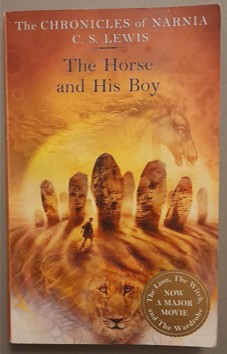
Hello readers! It’s time for another deep-dive into the Chronicles of Narnia, a fantasy series written for children by C. S. Lewis in the 1950s. The Horse and His Boy was the fifth book to be published, and so far, I have found each book to be better than the last. However, I was nervous to return to this one – more so than the others – because I remembered that it is set in a desert nation south of Narnia. And desert nations in twentieth-century fantasy books are often rife with racism and uncomfortable tropes.
Having read the book again, I can confirm that it hasn’t aged particularly well. Still, I wasn’t surprised by what I found; it has all the problems you would expect. In many ways, this book is one of the best in the Narnia series, avoiding (or at least mitigating) the narrative shortfalls of previous instalments, particularly when it comes to the main characters. However, I wouldn’t recommend letting a child read this book unsupervised. The more problematic elements should be discussed, and the outdated viewpoints should be challenged.
SPOILER WARNING!
There will be major plot spoilers in the plot summary. As you might expect.
Plot summary
The Horse and His Boy is set at a time when Peter, Susan, Edmund and Lucy are kings and queens of Narnia. However, they are not the main characters! Instead, the story starts in the south of the nation of Calormen, on the coast, where we meet a boy named Shasta. He has been raised by an old fisherman named Arsheesh, who treats him like a slave and often beats him.
One day, a Tarkaan (a great lord) asks the fisherman if he can buy Shasta. The fisherman claims that he could not sell his own son, and the Tarkaan immediately calls him out on his lies, because Shasta and white, and Arsheesh is black. When the two start bargaining a price, Shasta goes to pet the Tarkaan’s horse. He wonders aloud what kind of man the Tarkaan is, and to his surprise, the horse responds.
The horse introduces himself as Bree, and says he comes from Narnia, and wants to return there. He is enslaved in Calormen, forced to pretend to be a dumb horse. He suggests that they run away together, because Shasta (being white) is clearly from the north too. They sneak away in the middle of the night, riding along the Calormen coastline.
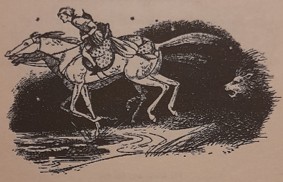
A few days later, they are chased by lions. They cross paths with another rider, and together they gallop into a river inlet to escape – although when Shasta looks back, he sees only one big lion on the shore (who could that be, I wonder?). The other horse mutters something to her rider, revealing herself to be another talking horse. Bree is delighted. The mare is called Hwin, and her rider is a girl called Aravis, who is riding to Narnia to escape a forced marriage. They join forces, although Aravis is very standoffish at first, perceiving Shasta to be of low birth compared to her own noble heritage.
They reach a great river, but the only way to cross is by going through Tashbaan, the capital city, which lies on an island with bridges on either side. The children and horses try to disguise themselves as peasants; unfortunately, their plans are ruined when a group of Narnians go past, who see Shasta and mistake him for one of their party.
King Edmund grabs Shasta and smacks him, accusing him of having run away. He has mistaken Shasta for Prince Corin, the son of the King of Archenland, who has joined the Narnians on their trip. Shasta is taken back to the Narnian residence, where he meets Susan and Mr Tumnus. Susan is here in response to an invitation from Rabadash, who wants to marry her; however, she has decided that she does not like him, and the Narnians are hatching a plan to escape without causing a fuss.
Later that night, the real Prince Corin returns. He finds it amusing that Shasta looks like him, and he tells him how to get away. Shasta escapes and runs to the tombs north of the city, where they had agreed to meet should they become separated. However, none of the others are there – only a cat. He falls asleep, only to be woken by the cries of jackals. Suddenly, a lion roars, scaring them off – but when Shasta looks for the beast, he realises that it was just the cat (who could it be?).
The other three were also waylaid in Tashbaan; Aravis was recognised by her friend, Tarkeena Lasaraleen, who reveals that Aravis’ father is looking for her in the city. Lasaraleen agrees to help Aravis escape, seeing it as some grand escapade, and suggests that they sneak through the palace of the Tisroc (the king). Unfortunately, they run into the Tisroc himself, and are forced to hide – only to end up listening to his secret council.
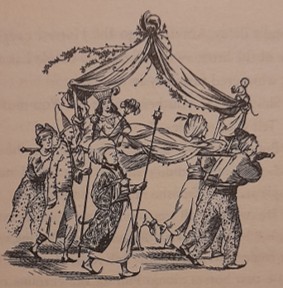
The Tisroc is addressing his son, Prince Rabadash, who is furious that the Narnians have escaped Calormen before he could marry Susan. He implores his father to let him invade Narnia, but his father refuses, as he has heard that Peter is aided by a magical lion (who could it be?). However, he allows Rabadash to take 200 riders to steal Susan without bloodshed. With this vital knowledge, Aravis makes her escape, crosses the river, and reunites with Shasta and the horses.
They ride across the desert for two days, keen to reach Archenland and Narnia before Rabadash does. They gallop through Archenland as fast as they can – and suddenly, a lion starts chasing them (again – what are the chances?!). The lion pounces at Aravis, and Shasta jumps off Bree to save her. They make it to the home of an old hermit who agrees to heal Aravis and the horses while Shasta runs ahead to warn the King of Archenland about the invaders.
When the King sees Shasta, he also mistakes him for Prince Corin at first. He quickly returns to his castle to defend it from Rabadash, and although he gives Shasta a hose to ride with his party, Shasta doesn’t know how to use reins or spurs, so is left behind. A fog descends, and he takes the wrong path – only to hear giant footsteps beside him. A “large voice” speaks through the gloom, explaining that he has followed Shasta on his journey. He is the lion who chased them, and the lion who scared off the jackals, and the lion that brought Shasta to the fisherman when he was a baby. Suddenly, the fog is burned away by a golden light – and Shasta sees a giant, golden lion, who then vanishes. He realises that he has walked all the way to Narnia.
When the sun rises, he is greeted by talking forest animals, who run to Cair Paravel with the news that Rabadash is invading Archenland. Soon, King Edmund and Queen Lucy ride out with Narnian troops, taking young Prince Corin with them. They had sailed back from Calormen, and their ship had only just arrived. They make it to Anvard while the battle is underway, but with Narnian support, Rabadash and his 200 troops are soon defeated.
When King Lune of Archenland sees Shasta after the battle, he announces that Shasta is his own son, who has been missing for years. His name is Prince Cor, and he is Prince Corin’s identical twin – which is why people kept mistaking them. A Narnian centaur once made a prophecy about Cor saving Archenland from danger, and a treacherous lord tried to get rid of him. Everyone thought that the prince was lost – but now Shasta is in line for the throne.
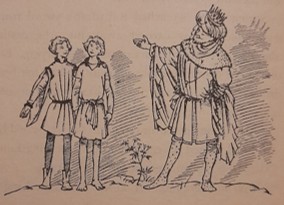
At the hermit’s dwelling, Aslan comes to speak with Bree, Hwin and Aravis. He tells Aravis that he pounced at her and scratched her to demonstrate the whip lashes that her slave received when Aravis ran away. Shasta comes to find them, and here they part ways with Bree and Hwin, who head into Narnia. Shasta and Aravis go to Anvard, where King Lune is deciding what to do with Rabadash.
Rabadash is refusing to apologise. Aslan appears, but while everyone else is stunned into reverent silence, Rabadash calls him a demon, and swears he will never give up on marrying Susan and destroying Narnia. Aslan gives him three opportunities to repent, but the prince ignores them – so Aslan turns him into a donkey. He says Rabadash will only regain his human form if he returns to the temple of Tash, but he will become a donkey again if he ever strays ten miles from the city.
In the final paragraph, Lewis explains that Shasta and Aravis get married once they are grown up, and that Shasta becomes the King of Archenland. He also adds that Bree and Hwin both get married, but not to each other, and that they often come to visit their friends.
Initial thoughts
Like The Voyage of the Dawn Treader and The Silver Chair before it, The Horse and His Boy is a solid fantasy adventure story, with much better pacing and characters than the first two books in the series. C. S. Lewis was clearly finding his voice as a children’s author; he was already a well-established writer of academic literature, but the Narnia books were a sudden change in tone and subject matter for him. With each book, he expanded the world of Narnia in new and exciting ways. However, it does feel a little odd to take the series back in time, to when the original four protagonists are grown adults. It leads to some holes in the world-building. And out of all the books in the series so far, this one, being set in a desert environment, has aged the most poorly.
My main gripe with this book, besides the racism (which we will address presently), is that Aslan steers the narrative. He brought Shasta to the fisherman, drove Shasta and Aravis together, saved Shasta from jackals, drove them to the Hermit’s dwelling, and then turned Rabadash into a donkey. All these literal “deus ex machina” interventions rob the characters of agency. One of the reasons that I preferred The Silver Chair is because Aslan gave the characters some orders, and then they had to fend for themselves. In this regard, The Horse and His Boy feels like a backwards step – although the protagonists still have more to do than in The Lion, the Witch and the Wardrobe.
The Calormenes are not described favourably
Right from the start of the book, I was grimacing at the descriptions of the Calormenes. The local men are described as having “long, dirty robes, and wooden shoes turned up at the toe, and turbans on their heads, and beards”. Later in the first chapter, Lewis adds that they are dark-skinned – in case the reader hadn’t picked this up from his contextual clues and derisive tone.
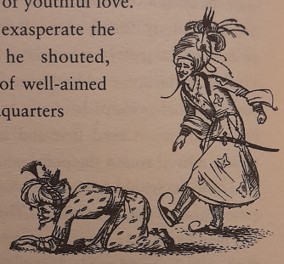
The racism isn’t always explicit, but it is pervasive. The most egregious cases are when the Calormenes are compared directly to the Narnians. For example, when the Tarkaan describes Shasta, he says he looks like “the accursed but beautiful barbarians who inhabit the remote North”. The word “beautiful” does a lot of unsavoury work here – and it’s a recurring theme throughout the book. Rabadash is intent on stealing Queen Susan and forcing her to marry him, treating her like some desirable, valuable commodity. Lewis has decided that the inhabitants of his fictional world consider the white Narnians to be superior. He sets up white superiority as the natural and accepted order of his universe.
We get some explicit racism when Shasta first sees the Narnians in Tashbaan, where he observes that “all of them had nicer faces and voices than most Calormenes” – a devastatingly sweeping statement. And what does “nicer” mean, anyway?
Endless, unchallenged white superiority…
All comparisons between Calormenes and Narnians serve to emphasize the Narnians’ superiority; for example, while the lords and ladies of Calormen get carried around on litters by slaves, the Narnian monarchs all walk on foot. Lewis makes it clear that the Calormenes lack morals, regularly depicting them as money-obsessed and small-minded. They call the Narnians barbarians, even calling Edmund the “White Barbarian King!” – one of the few explicit acknowledgements of race – and this is intended as irony, to show how backward their customs are.
When Shasta is revealed to be the son of King Lune, his father insists that he change his name to the one he was given at birth, rather than the one he has grown up with. So, for the rest of the book, Shasta is called “Cor”, and is shown to prefer it. Even Aravis notes that “Cor is a nicer name than Shasta” – again, implying that Calormenes prefer Narnian customs to their own, enforcing Narnian superiority. Maybe Shasta would embrace this name-change, keen to forget his miserable childhood – but the implication is that he is leaving his inferior Calormen self behind, and evolving into a superior Archenland form.
Another example of white superiority occurs early in the book, when we learn that girls in Calormen are married off at a young age against their will. Clearly, most western readers would be appalled by this prospect – and Narnia is once again cast as a beacon of morality when Hwin informs Aravis that no girl in Narnia is ever forced to marry. However, this feels decidedly out of place in a fantasy universe. Everything else about Narnian culture is pseudo-medieval: the knights, the swords, the archery, the food… Yet Lewis has decided that Narnia has modern-day western views on marriage, while Calormen remains backward and immoral. And he didn’t have to tie this to the race of the people living there, but he did.
Some questionable takes on slavery
As mentioned in my analysis of the Dawn Treader, the inclusion of slavery in children’s literature is a difficult topic. How can you handle it with the sensitivity that it deserves? Lewis brushes over the horrors while managing to imply that slavery is, of course, a very bad thing indeed. But then he goes and drops a quote such as “one of the worst results of being a slave and being forced to do things is that when there is no one to force you any more you find you have almost lost the power of forcing yourself.”
Um… No? I’m going to disagree with you there, Mr Lewis, on multiple fronts. One of the worst results? I don’t think so. And the implication that slaves are naturally lazy once the whip is withdrawn is just too offensive to contemplate further. What a lovely inclusion in a children’s book!
There is more world-building than ever before
The Horse and His Boy is the first book where Lewis takes a stab at inventing foreign languages and placenames. We learn that the leader of Calormen is the Tisroc, and that the people revere him as a god – indeed, they believe he is descended from the god Tash, and whenever they mention his name, they wish for him to live forever. It makes the world feel more alive, even if it is derivative.
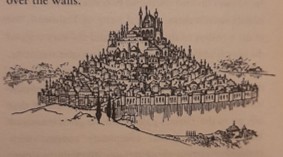
Tashbaan is the first city in the Narnian universe, and we get a sense of how many thousands of people live in Calormen. The city is classic fantasy fayre, built on an island in the middle of a river, tiered like Minas Tirith, with a palace and the Temple of Tash at the summit. You can’t go wrong with a fantasy city like that. I don’t know if it was already cliched in the 1950s, but I loved reading about it as a kid in the 2000s.
It is becoming more apparent with every book that we haven’t got a name for the world in which Narnia exists. Narnia is only a small nation in the north; there are vast lands beyond its borders. So, what is the name for this world? I guess the inhabitants just call it “the world”, much like we do.
Can I get a demographic breakdown of Narnia?
This has been bothering me for some time. In the first book, it is established that there are NO HUMANS in Narnia. This is why Mr Tumnus is so surprised to see Lucy, and why the White Witch is so horrified by Edmund. We are told that there have not been humans in Narnia for hundreds of years. Then, suddenly, after they become kings and queens, we hear about neighbouring nations, such as the Lone Islands, Archenland, and Calormen, which are inhabited by humans. But where do these people come from? Why would the Narnians treat humans as something special, if they live so close by?
In Prince Caspian, we learn that the Telmarine humans fell through a portal from our world, so they aren’t meant to be in the Narnian universe at all. Is this the case in the other human nations too? At the end of Prince Caspian, Aslan asks the Telmarines to return to the real world, implying that they aren’t welcome in the Narnian universe. However, one book later and Lewis is describing humans from Calormen and the Lone Islands as if they have lived there forever.
It seems to me that Lewis wanted to expand the world around Narnia, but he wanted to write stories about politics and cultures – and the only way he could do that was by inventing nations of humans. This leads to a sharp disconnect between The Lion, the Witch and the Wardrobe and the rest of the series. Narnia feels like an outlier from the world around it, due to conflicting histories regarding humans, and a wildly different ecosystem involving talking animals and mythical beasts.
Of course, when Lewis made human-focussed fantasy settings, he also had to introduce dumb animals so that the humans could ride horses and eat meat. This led to ecological complexities and ethical considerations around the rights of talking animals, which we discussed in our analysis of The Silver Chair. But if humans come from the real world, did they bring the dumb animals with them? Why is Narnia a strange outlier nation, while the rest of the world is classic medieval fantasy? It isn’t particularly satisfying, so far as world-building is concerned.
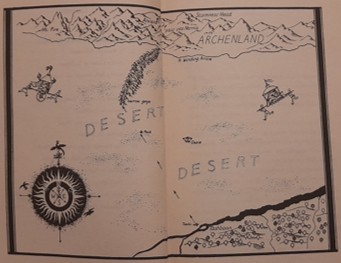
Another thing: how big are talking animals?
In previous books it was established that talking animals are generally larger than their dumb counterparts; for example, Reepicheep is far larger than an ordinary mouse, and the beavers are far larger than ordinary beavers. In this book, however, Bree and Hwin are the same size as normal horses. I guess the bears in the first two books were the same size as ordinary bears, too, otherwise we wouldn’t have had Lucy panicking about Trumpkin killing one. So, I can only conclude that the larger-than-normal rule only applies to animals that are normally small. Any animal larger than a human remains the same size, whether it can talk or not. But this feels a bit inconsistent, doesn’t it?
This book has some great characters
With every book in the series, Lewis gets better at writing convincing and engaging characters. Bree and Aravis are the stand-out protagonists in this story, but even the side-characters Lasaraleen and Corin feel more animated than either Peter or Susan in the first book. Bree has a complex character, with levels of pride, arrogance and cowardice. For example, he worries how other talking horses will perceive him, but has a very high opinion of himself compared to dumb horses. He feels disgraced that he didn’t run back to help Hwin and Aravis when the lion was chasing them, whereas Shasta, an unarmed boy, did. It’s nice to have a character this layered in a children’s book – he isn’t one of the “good guys” because he is never selfless. He is only driven by his yearning to return to Narnia. Still, his anxious antics and arrogant put-downs are highly entertaining.
Aravis is the strongest girl character yet
Aravis is a typical “tsundere princess” character, although I doubt Lewis would have been familiar with this term. She is proud, clever and determined, and far more believable than Lucy or Susan (especially Susan). Her scheming stepmother convinces her father to marry her off to a sixty-year-old lord, and Aravis’ reaction is to ride her horse into the woods and try to kill herself. Pretty bold actions for the protagonist of a children’s book. Thankfully, Hwin speaks up in time to stop her.
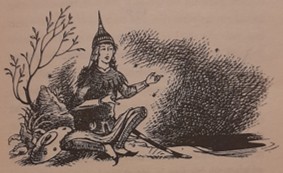
Aravis then concocts a detailed escape plan: she tells her father that she is going into the woods for three days to perform sacrifices, but instead rides all the way to Azim Balda, a big city. Here, she writes a fake letter to her father from Tarkaan Ahoshta, explaining that he met Aravis in the woods and married her there and then, before taking her back to his castle. This genius plan buys Aravis more time to escape, as she knows her father will be incensed with rage and will ride in the opposite direction to confront Ahoshta. Lucy and Susan could never have concocted and enacted a scheme like this.
The reason I call Aravis a “tsundere princess” is because she has a very cold exterior at first. She doesn’t like Shasta because she perceives him to be of low birth, and Bree has to correct her when she describes Hwin as her own horse – reminding her that she cannot claim ownership of a talking horse. However, by the end of the book, Aravis has grown to respect Shasta, and to appreciate the suffering of slaves. Her character arc doesn’t wrap up as neatly as Shasta’s, but at least she was a character we could root for.
Hwin is unmistakably a lady horse
Hwin is the first grown-up female protagonist in the series. Thankfully, she isn’t a total wet blanket, but her character doesn’t have as much depth as Bree. She is instantly besotted with him, flattering him with lines like “I’m sure a great charger like this knows far more than we do”. This is Hwin being modest, rather than Lewis suggesting she is stupid; indeed, Hwin is the most logical member of the party, and suggests the most sensible plan to get them through the city of Tashbaan. She recommends that they disguise themselves in mud to look like poor horses, and this almost works. She is also very caring by nature, and although this is tied to her being a female horse, it isn’t offensively stereotypical, because she isn’t relegated to a purely supporting role. She’s a refreshingly rounded character by Lewis’ standards.
But Susan is still here to let the side down
Of all the characters to bring back… The plot of this book rests heavily on Rabadash wanting to marry Susan, and of course she has very little agency in the matter. She decides that she does not like him, and then she bursts into tears when Edmund suggests that the Calormenes might not allow them to leave the city.
Later, Prince Corin notes that Susan is “not like Lucy, you know, who’s as good as a man, or at any rate as good as a boy. Queen Susan is more like an ordinary grown-up lady. She doesn’t ride to wars, though she is an excellent archer.” Even when Susan is barely in the book, Lewis likes to remind us how useless she is…
Lucy also makes a return, accompanying the Narnian soldiers to battle with her vial of magical healing potion from Father Christmas (like I said, The Lion, the Witch and the Wardrobe feels like an outlier from the rest of the series). However, when the battle is over, she talks with Aravis about “Arvis’s bedroom and Aravis’s boudoir and about getting clothes for her, and all the sort of things girls do talk about”. Great. Lewis has relegated the grown-up Lucy to Susan’s level of tiresomeness.
All the Narnians talk in olde English for some reason
This doesn’t happen in any of the other books. But here, for the first time, Lewis makes the Narnians speak in Shakespearian English. This starts in Tashbaan with Edmund and Susan, and continues in Archenland. Why would they speak like this? Is it to emphasize that the children from the first book have become grown-up monarchs? I just don’t know where they would have learnt to speak in this manner.
In summary…
Read The Horse and His Boy with caution. It’s very much “of its time”… Personally, I’m happy reading old books as historical documents, but I imagine that the racism in this book would make some readers very uncomfortable, and I don’t think a child should read it unsupervised. I wonder how Greta Gerwig will portray the Calormene people if she manages to make her film? I suppose there’s a chance that she will skip this story entirely, just like Disney did. I guess we’ll have to wait and see.
Happy reading, and have a lovely week!
My Chronicles of Narnia analysis series:
Happy reading!
Discover more from C. W. Clayton
Subscribe to get the latest posts sent to your email.


8 thoughts on “The Horse and His Boy (1954) is fun but problematic”