
Hello readers! Apologies for the incendiary title of this post. The simple answer is no, obviously not. The likelihood of Steven Spielberg having read my book is effectively zero, even if I have sold more copies of than I ever expected. So, rather than using this post to launch some grand conspiracy with potential legal repercussions, I will instead explore the emotional turmoil of having a multi-million-dollar blockbuster film demonstrate the non-originality of my own ideas.
Spoiler warning!
This post will contain spoilers for Disclosure Day! I won’t be discussing my opinions on this film – I’ll save that for a proper review, once I have had time to mull it over. Still, I liked it overall, and I won’t be saying anything bad about it.
There will also be spoilers for The Starlit Ship, my book from 2020! That isn’t such a big deal, obviously. If you want to read it, it’s on Amazon. You can even read it for free through Kindle Unlimited.
Also, be warned that this post will contain cringe. I am aware that comparing my small-time creative work to a successful blockbuster is pathetic – but quite frankly, I need to vent. And I’d like to know if anyone else has ever experienced anything similar.
First, let’s establish some FACTS
There can be no denying that there are some striking similarities between Disclosure Day and The Starlit Ship, my trilogy of science fiction thrillers. But let’s straighten things out with a timeline before discussing this further.
I first started writing The Starlit Ship in 2016, and I published the first instalment on Amazon in December 2020. Steven Spielberg said that he started writing Disclosure Day in 2023, in interview with CBS News. So, in my mind, there can be no question that any similarities are a coincidence. I certainly didn’t take any inspiration from Spielberg. And Spielberg cannot possibly have taken inspiration from a small-time hobby writer like me.
Instead, we have on our hands a simple case of two very similar ideas being created in isolation. Not perfect isolation, obviously – all ideas have inspiration, standing on the shoulders of giants and whatnot. And these inspirations are shared. We’ve all seen the same films, read the same books, studied the same history. If you give each person on this planet an identical selection of building blocks and tell them to make something original, you will almost certainly end up with duplicate products. It’s unavoidable.
That being said, the similarities are uncanny
About half an hour into the film, I thought “wow, this is a bit like my book”, but I quickly dismissed this thought as being too self-absorbed and egotistical (how humble of me, I know). Then, about ten minutes later, my partner leaned over from the cinema seat next to me and whispered: “you need to get a lawyer”. And it took me until the end of the film to figure out what they meant by this. It turns out that they, too, thought that the film shared some eerie similarities with my work. In fact, they had spotted even more similarities than I had! So, a big thank you to them for inspiring this post.
Obviously, the concept of hiring lawyers and challenging Spielberg is a joke. But now that I have made this very clear (please nobody sue me), let’s get into the details.
The overall concept
The theme of Disclosure Day is disclosure. Who could have guessed. We have a protagonist who knows something that the government wants to keep secret (actually, it’s a shady organisation not technically affiliated with the government – we’ll get back to that). This information has the potential to drastically change the world, because it relates to the arrival of aliens. The government is scared that if the news gets out, people will panic, so they will go to any lengths to stop the protagonist broadcasting his information.
These plot points are also the backbone of The Starlit Ship. The protagonists want to share the knowledge of an alien arrival, and the government will go to any lengths to stop them, leading to a cat-and-mouse chase. The philosophical quandary at the heart of the story is whether people can be trusted with the knowledge that aliens have arrived. Do they deserve to know, or should they be kept in ignorance to protect them from mass panic and unrest?
Imagine my surprise when the main concept of my book makes it into a blockbuster Spielberg film – and into the title of the film, no less! (Note to self: try to convey the major themes of your book in the title.)
The antagonist
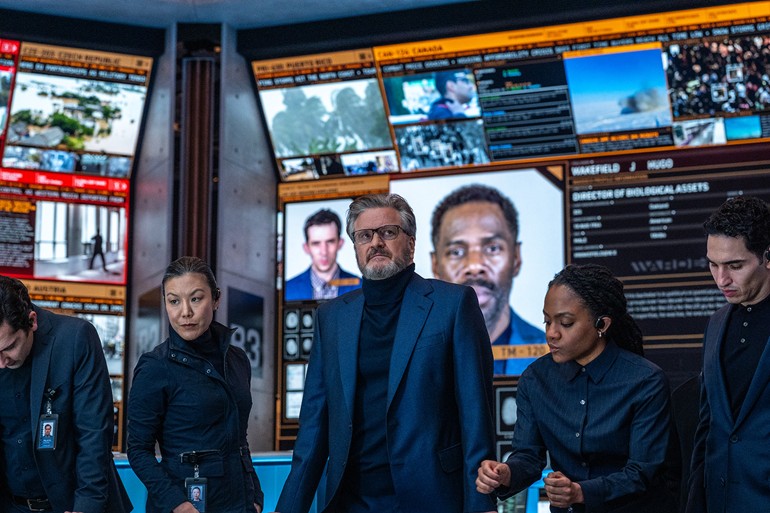
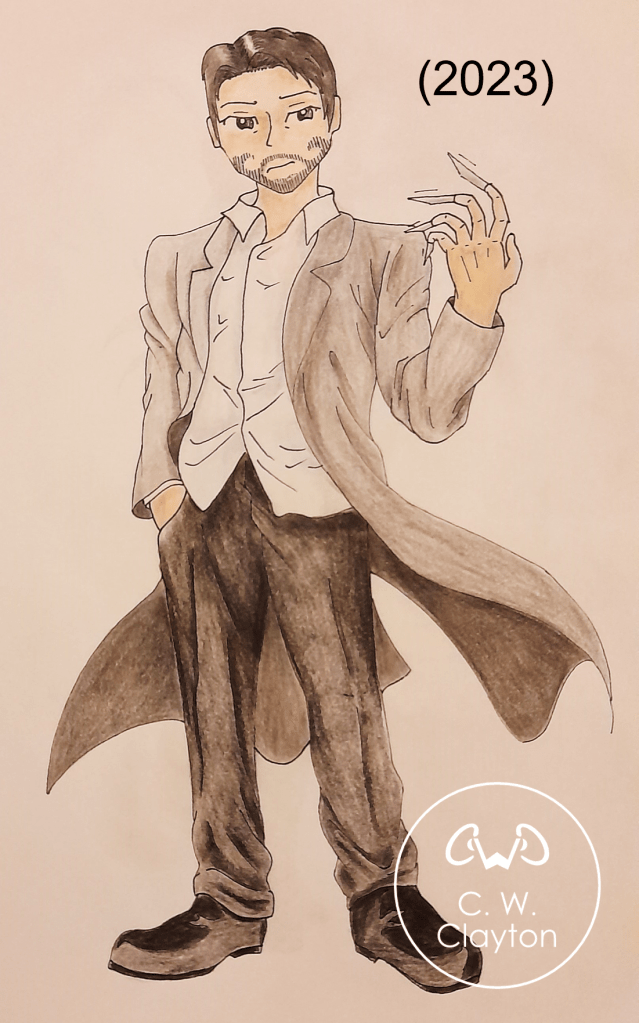
The bad-guy in Disclosure Day is Colin Firth. He’s a stern-looking white guy with dark hair and a short, smart beard, and he wears dark clothes, including a long, dark coat. Of course, Colin Firth’s appearance and wardrobe left me astounded, because his description aligns almost perfectly with the bad-guy in my story; in fact, my partner once suggested that Colin Firth would be an ideal casting choice for him (I actually disagreed – I always imaged him to be slightly younger – but the similarity is certainly there).
Not only are the antagonists of both stories superficially similar, but they have similar jobs. Both of them work for shady organisations detached from the public-facing government, who use public resources and military equipment to achieve their ends. Their job is to research alien technology, and to keep all knowledge of aliens from the public. And they will go to any lengths to keep this secret – which obviously means killing a lot of people to ensure their silence. Also, they both experience the same ethical dilemma, and the same eventual failure. Their emotional character arcs are almost identical.
The protagonists
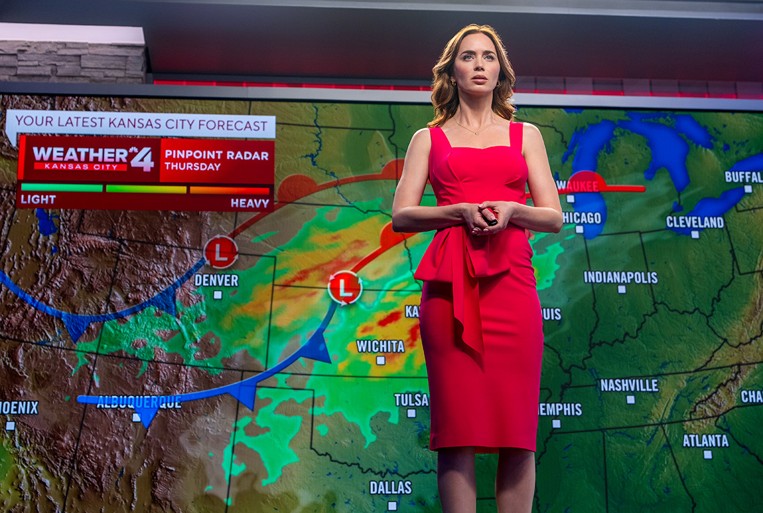
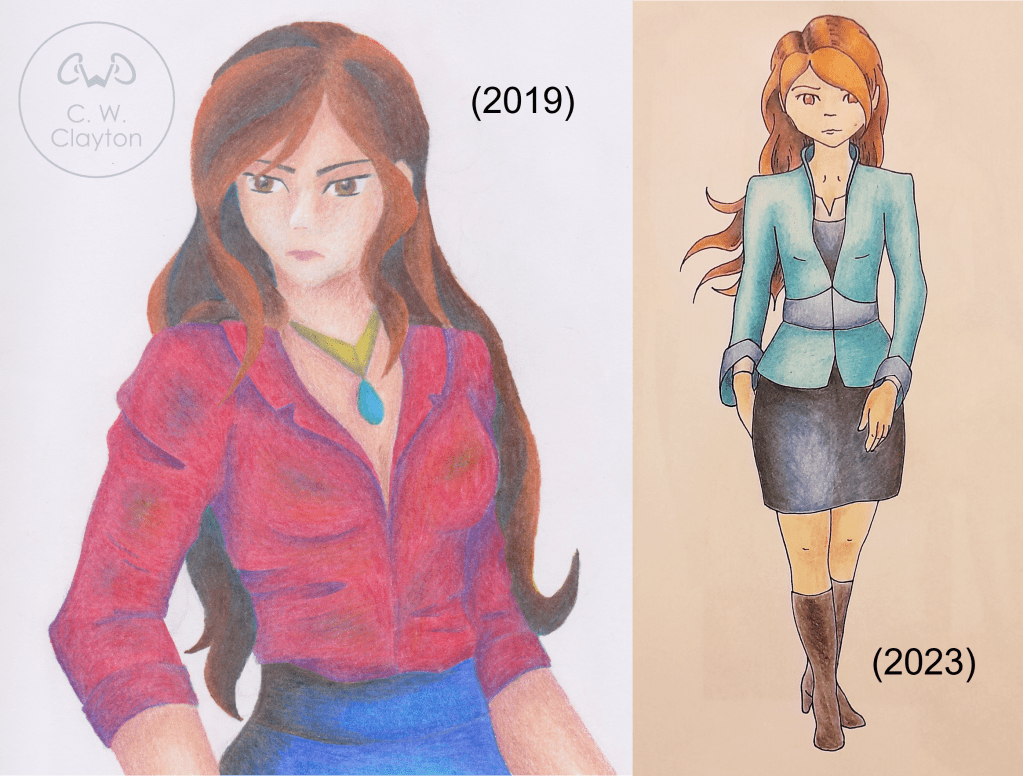
The main characters of Disclosure Day are a man and a woman who possess a knack for pattern recognition and emotional communication, respectively, who must go on the run to escape the bad-guy’s shady non-governmental organisation. Again, this plot setup is the same as in my book – but the coincidence doesn’t end there! The female protagonist in Disclosure Day is a talented and pretty, brunette journalist who eventually facilitates the broadcast of the alien secret to the world. This exactly matches the description and major plot role of Susan in my Starlit Ship book. Coincidence?! Yes, obviously.
Still, having an antagonist from my own work mirrored on the big screen is weird enough – but a protagonist as well? Two of my main characters?! That’s wild.
The alien MacGuffin
The aliens in Disclosure Day have, of course, brought some science fiction technology with them. Their alien device (which is literally referred to as “the device”) gives our protagonists super-human abilities to understand and communicate with others. And of course, as you have probably guessed, this is the same alien MacGuffin that I came up with almost ten years ago now.
In The Starlit Ship, my protagonist has been exposed to alien technology without realising, which has given him the ability to engage the attention of everyone he meets. He thinks he just has a knack for storytelling – unaware that his body has been rewired for this specific purpose. This is pretty similar to the protagonist in Disclosure Day, who thinks he has a natural gift for numbers and pattern recognition, having blanked-out the traumatic memory of aliens bestowing this power upon him.
And finally: the uneasy coupling of action and philosophy
It is difficult to pin down the genre of Disclosure Day. Clearly, it is science fiction – but is it an action film? Sometimes. There are action scenes, including car chases and a close encounter of the train kind. But is it philosophical too? Again, sometimes. There are a few moments where we are asked to consider the ethical repercussions of disclosing secrets to the general public. I’d be tempted to call it a thriller, but there were long stretches of this film that weren’t really thrilling at all. So, although “thriller” feels like the most appropriate tag, and has been used in the film’s advertising, it certainly wasn’t a conventional thriller.
And guess what – I faced the same quandary when trying to pin down how to advertise The Starlit Ship. It isn’t constantly exciting in the way that a typical thriller would be, because although it has action scenes (including train chases, breaking into military bases, and running away from shady government officials with guns), there are plenty of domestic, character-driven scenes too – and, like Disclosure Day, huge sections of the plot are revealed by characters sitting and watching the news on TV.
It’s hard to pin down this similarity, but I can feel that it’s there. I suppose it’s just the general vibe.
Still, there are more differences than similarities!
Thankfully, the plots of Disclosure Day and The Starlit Ship are completely different – as you would expect. Like I said at the outset, this post is not about the theft of ideas, because that clearly isn’t the case here: it is about coming to the realisation that “original” ideas are never as “original” as you might think. Although the key themes are shared, and there are some surprisingly similar characters, my book trilogy obviously has much more space than a two-hour film, and explores plenty of other concepts and ideas, with a more complex plot and a much larger supporting cast. This post isn’t about me feeling ripped off. It’s about me feeling undermined.
The negatives
Having the themes and characters from my book brought to life on the big screen was disconcerting. And the fact that my partner recognised these similarities too, without prompting, reassures me that this isn’t just my ego talking.
For the most part, I managed to subdue the niggling sense of recognition (“that’s mine!”) and enjoy the film. But once it was over, and I talked it through with my partner, I spent an hour or so in disbelief. I couldn’t feel ripped off, because the ideas hadn’t been stolen. I don’t think you can own the intellectual property rights of a “vibe”, or even character appearances, especially when characters look so normal. Instead, I felt defeated, as if I had been beaten in a race. Someone else took the same ideas and popularised them before I did.
It’s a sobering feeling. But that’s the way of the world. As I know from my day job as a research scientist, this sort of thing happens all the time; in science research, it leads to a constant pressure to get your ideas out there as fast as possible, to make sure that you are the one planting your flag on unclaimed intellectual territory.
The positives
In some ways, though, I am delighted. If Spielberg has taken a crack at these themes, clearly there is an appetite for them (even if the film has received divisive reviews). Maybe I could even ride on the coattails of this film for a while? The similarities could work in my favour: if you liked Disclosure Day, maybe you would also like The Starlit Ship? Publishers seem to love cookie-cutter stories, easily compared to something successful that came before, because they’re easier to advertise.
In summary…
Apologies for a self-indulgent post this week. I would love to hear from other small creators who have felt robbed or undermined when an idea they thought was solely theirs was suddenly used by a much bigger creator. I’m sure this sort of thing happens all the time.
Happy reading, and have a lovely week!
Links:
Discover more from C. W. Clayton
Subscribe to get the latest posts sent to your email.


One thought on “Disclosure Day (2026): Did Spielberg steal my story?”